

Top Deals
 Back
Back Preqt
Preqt1:08 PM · Jan 21, 2026
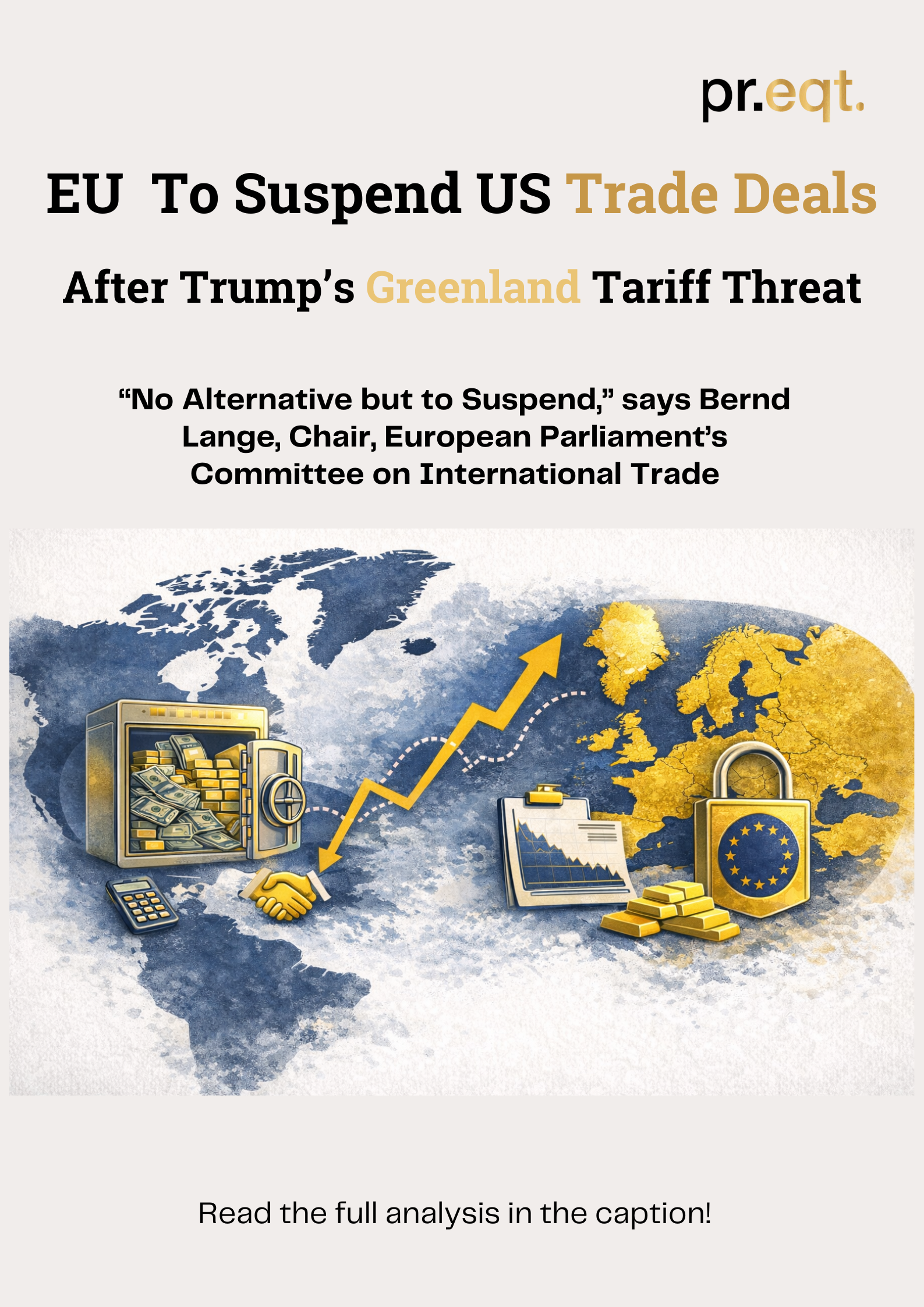
“No Alternative but to Suspend,” says Bernd Lange, Chair of the European Parliament’s Committee on International Trade.
What was the EU–US trade deal?
The EU–US trade deal was designed to cool transatlantic tensions and stabilise trade relations after years of tariff disputes. It reduced tariffs, encouraged investment, and aimed to restore predictability between the two largest trading partners in the world.
All you need to know :
Signed in July in Scotland
US tariffs on EU goods cut from 30% to 15%
EU agreed to boost investments and support US exports
Deal still required European Parliament (EP) approval to become official
The US escalated tensions by linking trade pressure to the politically sensitive Greenland issue and using tariffs as a bargaining tool. This crossed a red line for the EU, which views territorial sovereignty as non-negotiable.
Two clear triggers:
Greenland issue: Trump signalled interest in Greenland, raising concerns over EU territorial integrity
Tariffs: Fresh, incremental tariffs announced on eight European nations
What step is the EU taking now?
The European Parliament is moving to suspend approval of the EU–US trade deal as a direct response. This is meant to signal that trade cannot be separated from political coercion.
All you need to know :
Suspension to be announced in Strasbourg
Backed by EP trade committee leaders
Approval deemed “not possible at this stage”
Deal blocked before reaching final EP vote
What could happen next?
The dispute risks spilling into a broader trade war, with retaliatory tariffs back on the table. Markets are already reacting to the rising uncertainty.
Possible implications:
Retaliatory tariffs: EU could impose levies on $109 billion of US goods
Timeline risk: Current reprieve on US exports expires 6 Feb 2026
Trade war fears: EU–US trade totals $1.9 trillion (2024)
Market impact: Stocks opened lower amid trade war concerns
Key takeaway - What began as a trade agreement is now entangled in geopolitics. If trust breaks down, the fallout won’t be symbolic—it will be economic, global, and costly for both sides.

1 Likes

0 comments

Share
No comments yet