

Top Deals
 Back
Back Preqt
Preqt12:01 PM · Feb 17, 2026
Twenty years. One massive shift. But the story is deeper than GDP charts suggest.
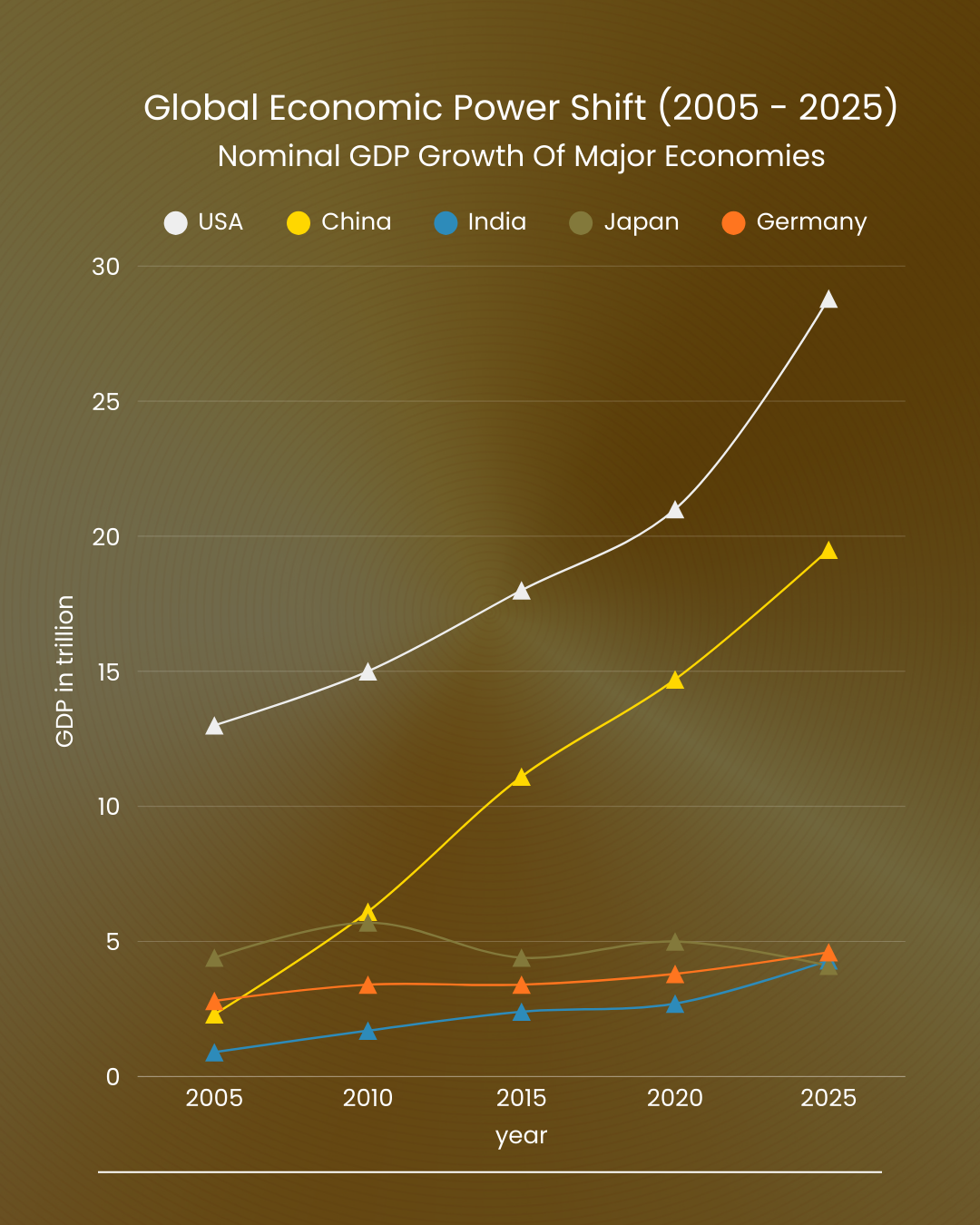
In 2005, China was just beginning its export-driven sprint, and India was still shaking off decades of slow growth. Fast forward to 2025, and the global economic map has been redrawn.
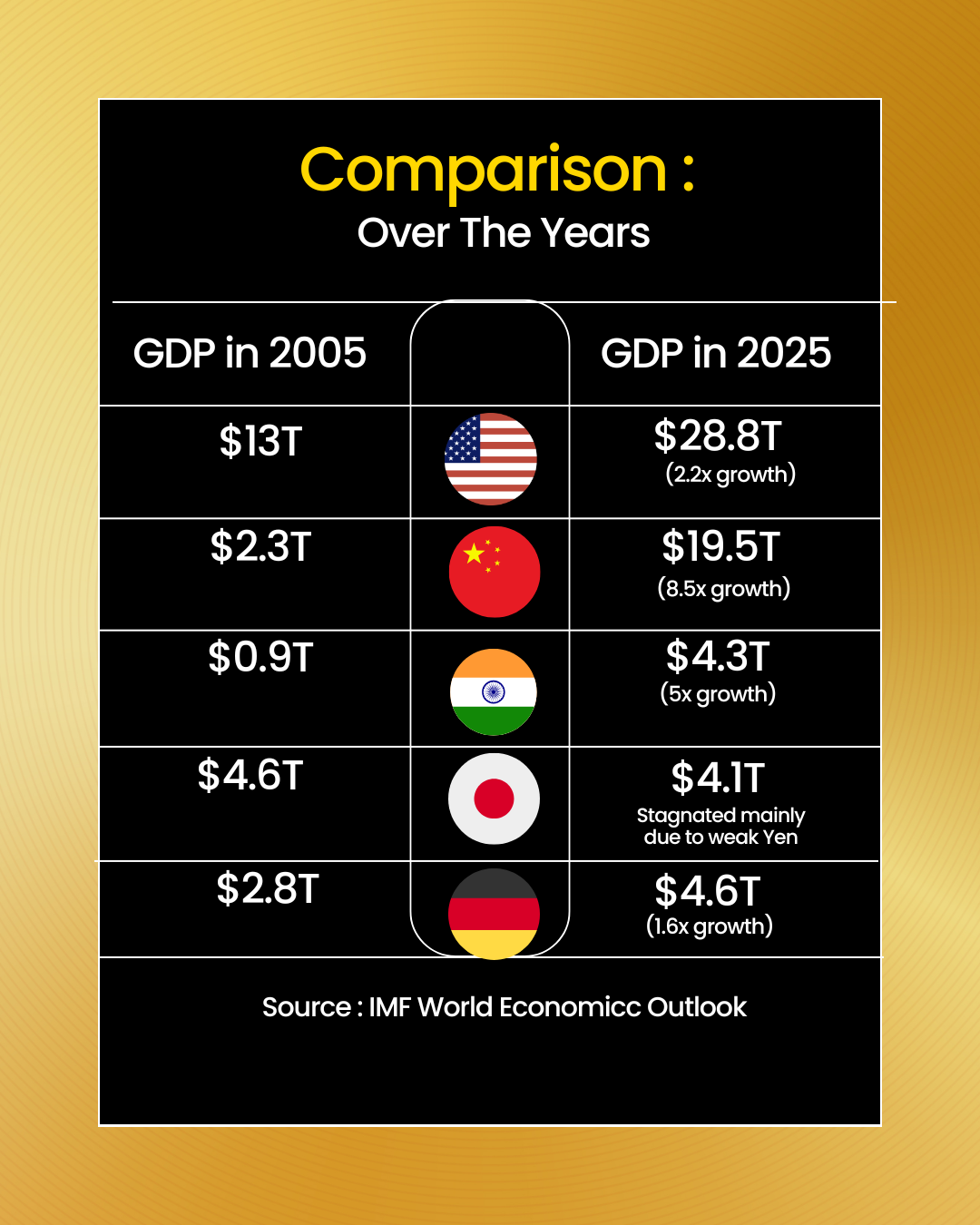
China’s economy has expanded 8.5x, while India has leapfrogged both the UK and Japan to challenge for the No.4 global spot. Meanwhile, the US has quietly doubled its size to $28.8 trillion, holding onto its dominance.
But here’s the nuance.
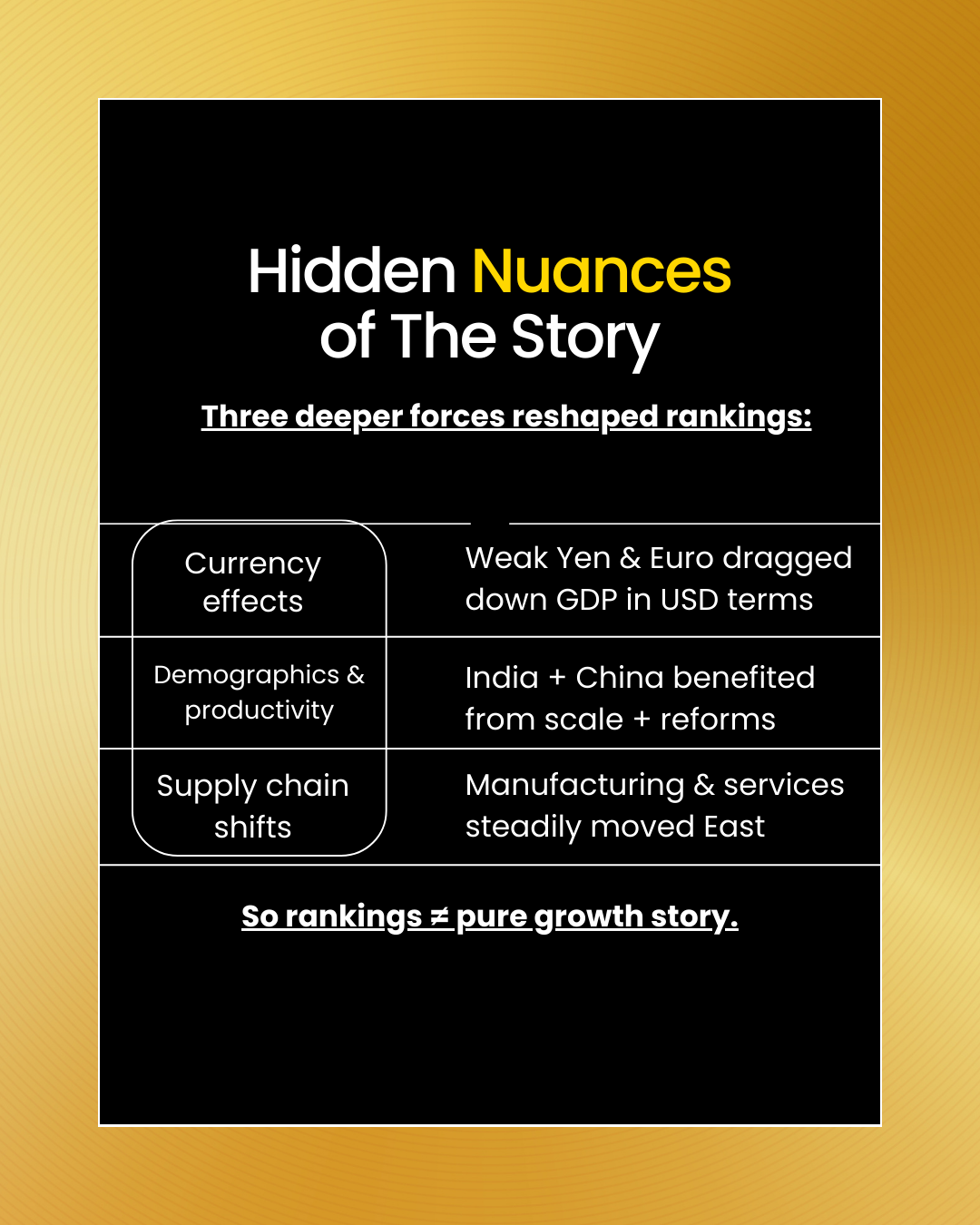
Japan’s apparent stagnation isn’t purely an economic failure; a sharply weakening Yen compressed its GDP in dollar terms, masking real domestic growth. At the same time, China’s rise was powered by centralised decision-making and industrial policy, while India’s climb reflects the slower but more resilient path of a democracy.
This isn’t just about growth rates.
It’s about:
• Currency strength
• Demographics
• Productivity
• Capital flows
• And policy discipline
Together, they are quietly shifting the centre of global economic gravity eastward.
The bigger takeaway?
The Global South is no longer a future promise; it is today’s growth engine. India’s rise to $4.3 trillion signals the start of a world where emerging economies increasingly shape capital, trade, and geopolitics.
But the real challenge now is converting scale into shared prosperity.
So the real question becomes:
➡️ Has economic power truly shifted, or are we only seeing the first chapter?

1 Likes

0 comments

Share
No comments yet