

Top Deals
 Back
Back Preqt
Preqt6:18 AM · Jan 20, 2026
Is AI transforming jobs faster than companies and workers can adapt?
The U.S. economy is ~$31 trillion, with labor accounting for ~60% of total value.
AI is expected to transform the $18.6 trillion labor market, but experts disagree on both the extent and the pace of this transformation.
The debate persists because AI’s impact unfolds across three layers: exposure, adoption, and labor response.
While 54.6% of U.S. adults use AI, fewer than 10% of firms have integrated it into production, due to early productivity dips.
Understanding AI’s true impact requires analyzing what AI can do, what firms adopt, and how labor markets respond.
Layer 1: Exposure
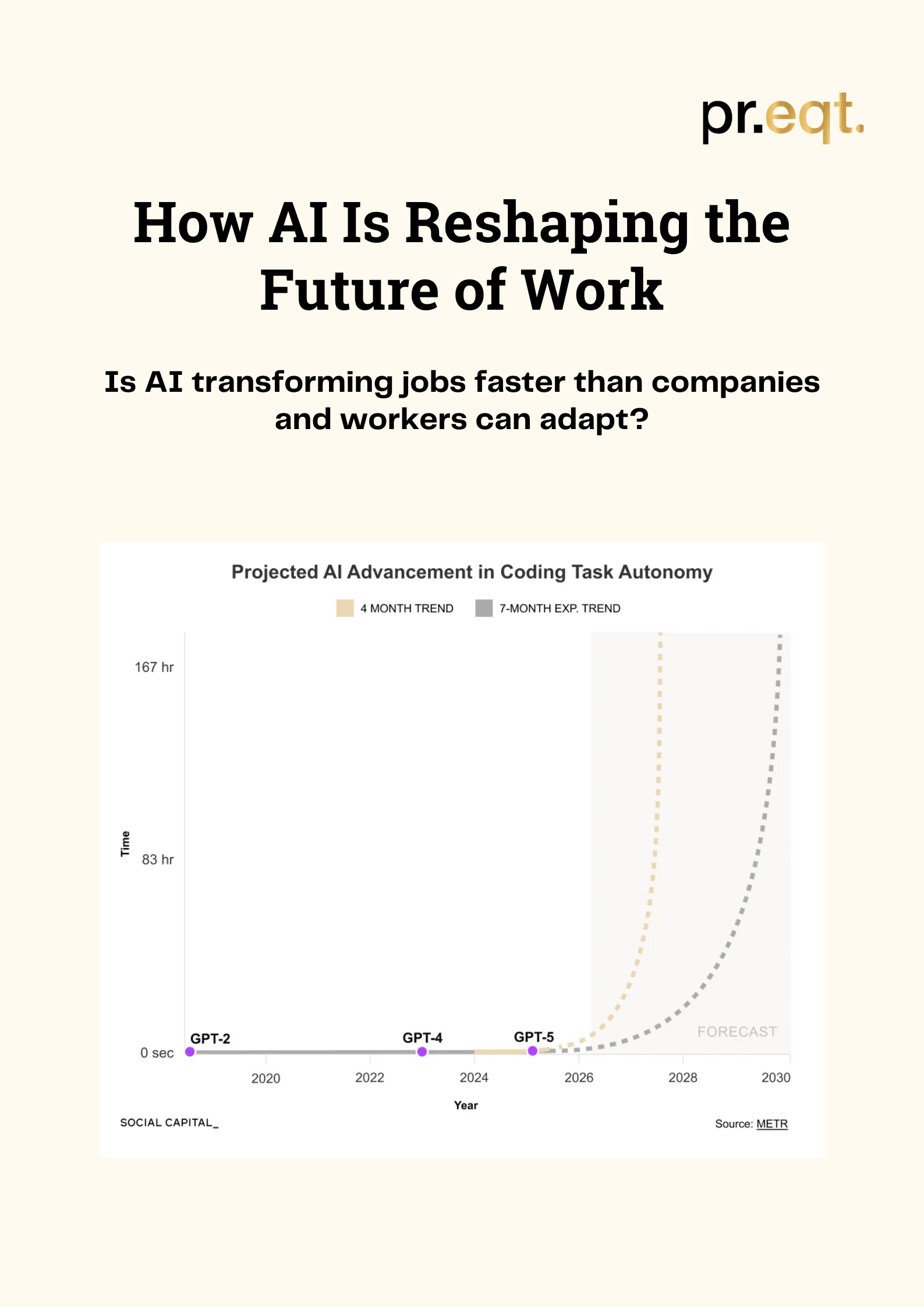
AI is rapidly expanding into cognitive, non-routine tasks. The duration of autonomous tasks AI can handle is doubling roughly every 7 months.
Layer 2: Adoption
Despite widespread individual usage, firms remain stuck in the Productivity J-Curve, where learning costs and low-quality outputs temporarily reduce productivity.
Layer 3: Labor Market Response
As adoption scales, jobs will be augmented, displaced, or reinstated, reshaping roles rather than uniformly eliminating them.
Conclusion: The future of work debate feels unsettled because different observers are reacting to different layers of the same system. Mapping these layers together is essential to understanding how AI will reshape global labor markets.

1 Likes

0 comments

Share
No comments yet