

Top Deals
 Back
Back Preqt
Preqt12:02 PM · Jan 27, 2026
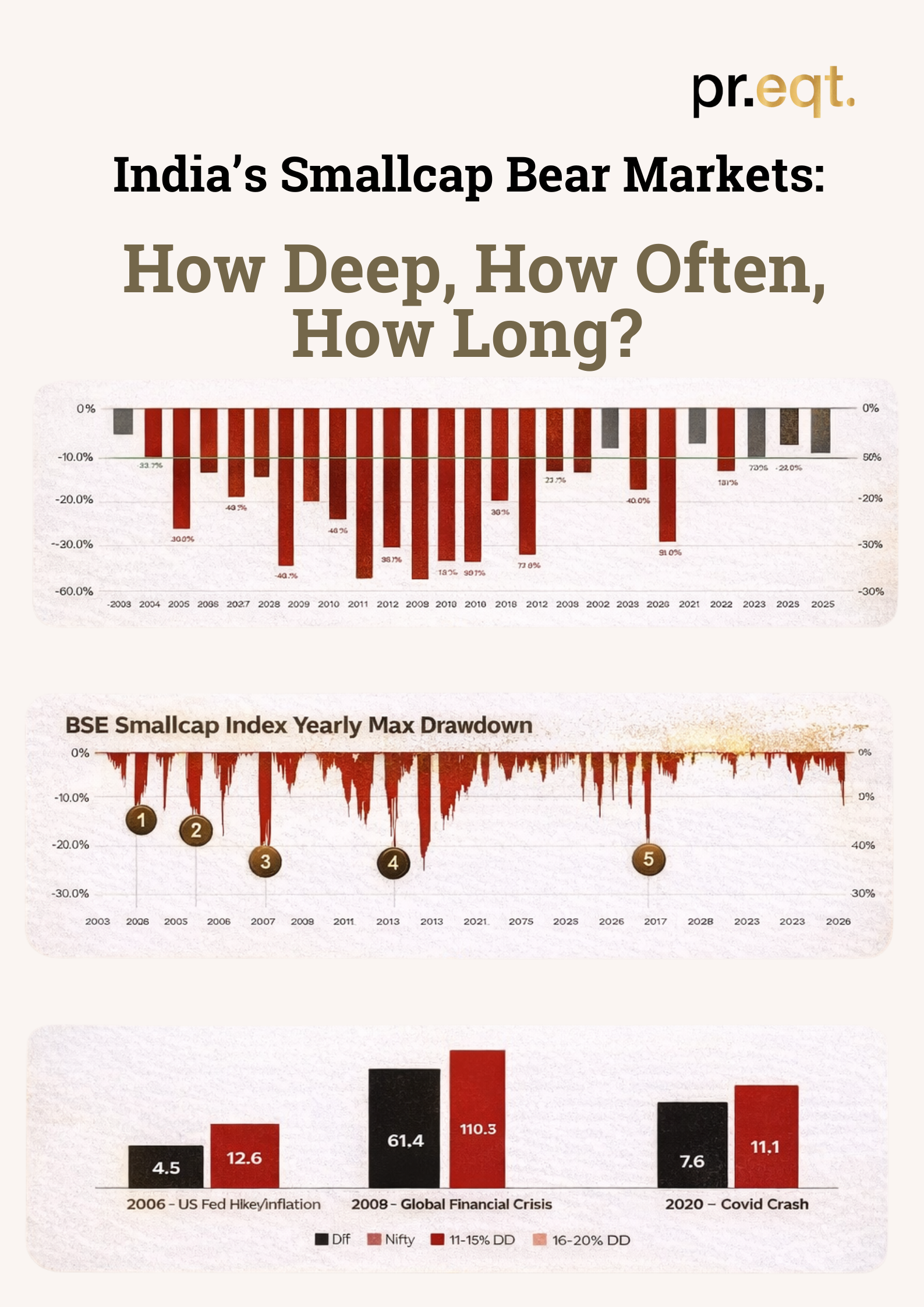
Smallcap stocks are again under pressure. To understand what this phase could mean, it helps to look at history. This analysis is based on the BSE SmallCap Index (1200+ stocks), the broadest proxy for India’s smallcap universe, covering data from 2003 to 2026.
A bear market is typically defined as a drawdown of 20% or more from a previous all-time high.
Since 2003:
7 smallcap bear markets have occurred (6 completed, 1 ongoing)
On average, one bear market every ~3.5 years
Smallcap drawdowns have been significantly deeper than large caps
History shows that smallcap corrections can be extreme.
Worst drawdown:
–79.5% during the 2008–09 Global Financial Crisis
Longest time to bottom:
799 days (2018–2020 cycle)
Smallcaps entered bear-market territory in over 80% of calendar years since inception
The 2008 episode stands out: the index remained down more than 50% for 6 of the 7 years between 2008 and 2014.
Recovery is measured as the time from market bottom to a new all-time high (ATH).
There is no fixed recovery pattern
3 of the last 4 bear markets recovered in roughly one year after the bottom
After the 2008 crash, it took nearly 10 years for smallcaps to hit a new ATH
On average, smallcaps take about twice as long as Nifty to recover post bear market
Over the long term:
The BSE SmallCap Index has spent ~50% of its time in drawdowns greater than 20%
This is largely due to:
A ~10-year recovery after the 2008 peak
A ~3-year recovery after the 2018 peak
Extended recovery phases materially affect long-term returns.
Smallcaps offer high growth potential—but timing matters.
Buying smallcaps near the peak of a bull run can lead to prolonged drawdowns and, in some cases, permanent wealth destruction.
History suggests that patience, valuation discipline, and cycle awareness matter far more in smallcaps than in large-cap investing.

1 Likes

0 comments

Share
No comments yet