

Top Deals
 Back
Back Preqt
Preqt11:00 AM · Feb 11, 2026
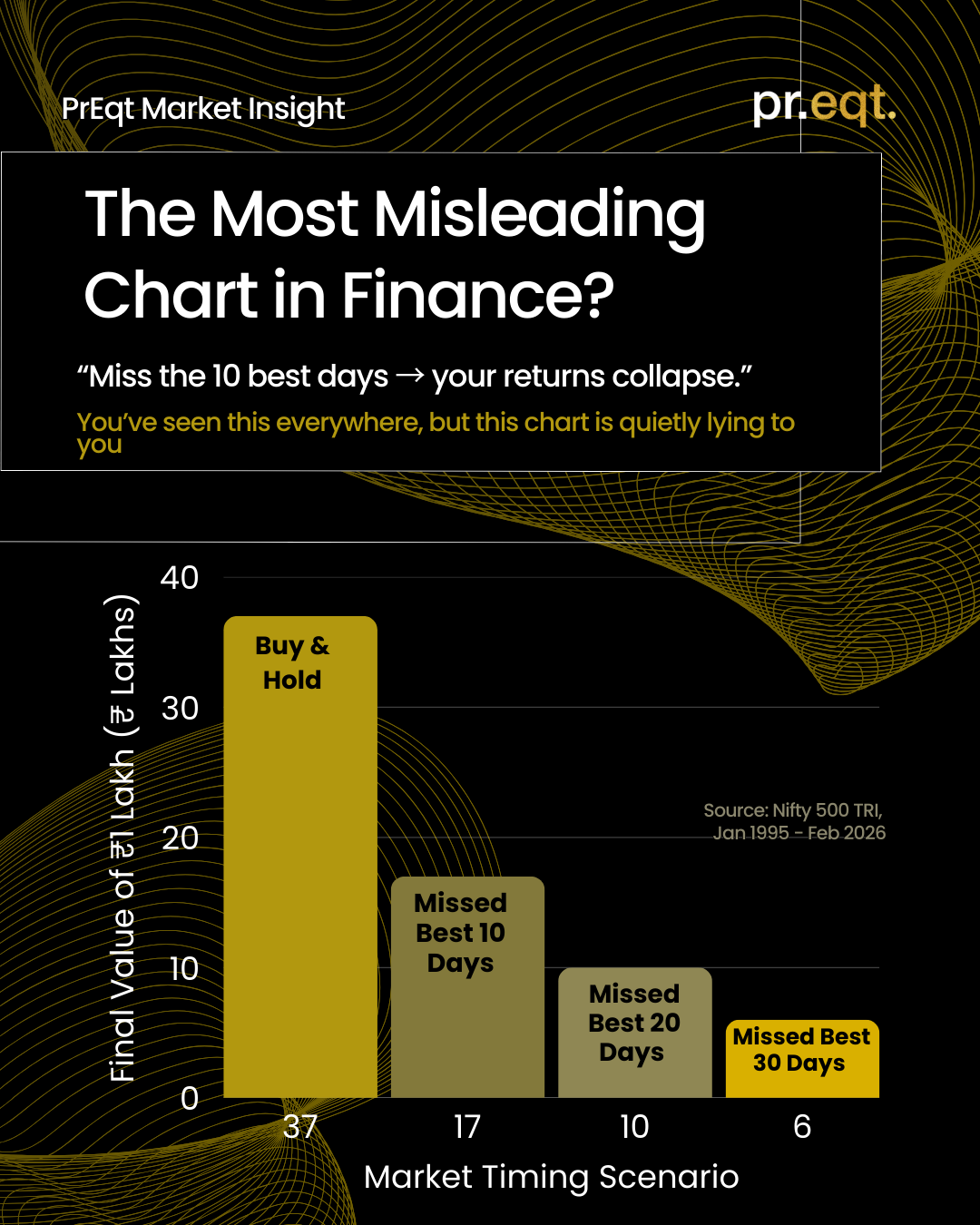
One of the most popular charts in investing claims that if you miss just a handful of the market’s best days, your long-term returns collapse. For example, ₹1 lakh invested in the Nifty 500 since 1995 becomes about ₹37 lakh. Miss the 10 best days, and it drops to ₹17 lakh. The implied lesson is simple: stay fully invested or risk permanent wealth loss.
But this framing hides an important truth.
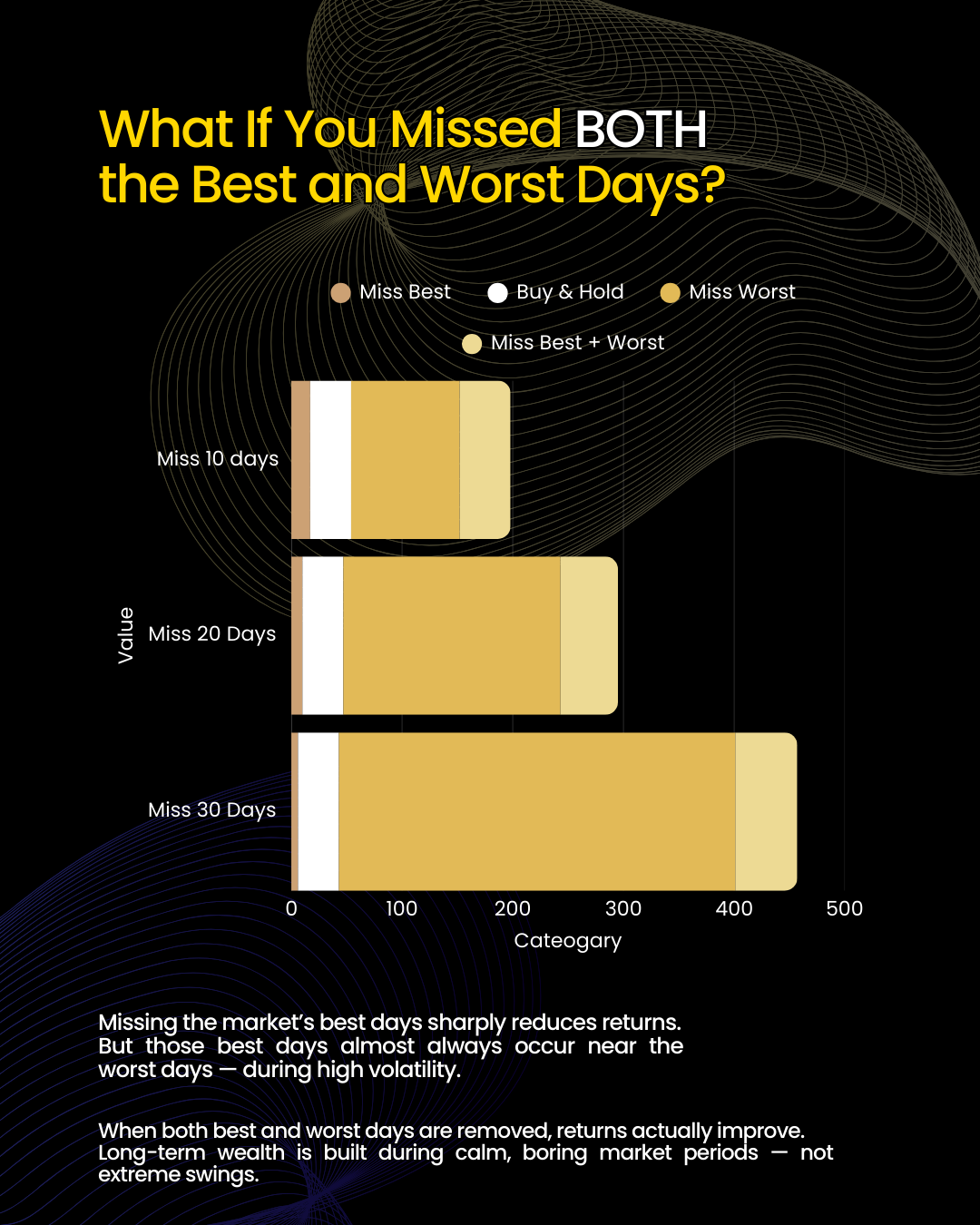
The same data shows that if an investor missed the 10 worst days instead of the best, ₹1 lakh would grow to ₹98 lakh. Miss the 20 worst days, and returns rise to ₹1.96 crore. Miss 30, and wealth jumps to ₹3.58 crore. This reveals that extreme days, both positive and negative, dominate short-term outcomes but distort long-term understanding.
A deeper look makes this clearer. If an investor missed both the 10 best and 10 worst days, returns actually improved to ₹46 lakh, higher than the buy-and-hold outcome of ₹37 lakh. Removing 20 from each side raises it to ₹52 lakh, and removing 30 increases it to ₹56 lakh. This suggests that extreme volatility, taken together, subtracts more than it adds.
The reason is clustering. Of the 20 best single-day returns in Nifty 500 history, 14 occurred within one month of one of the 20 worst days. Market crashes and rebounds happen together. During the dot-com bust, the global financial crisis, and the COVID crash, sharp declines were followed closely by sharp rallies. Real investors don’t selectively miss only the good days; they typically miss both the good and bad days.
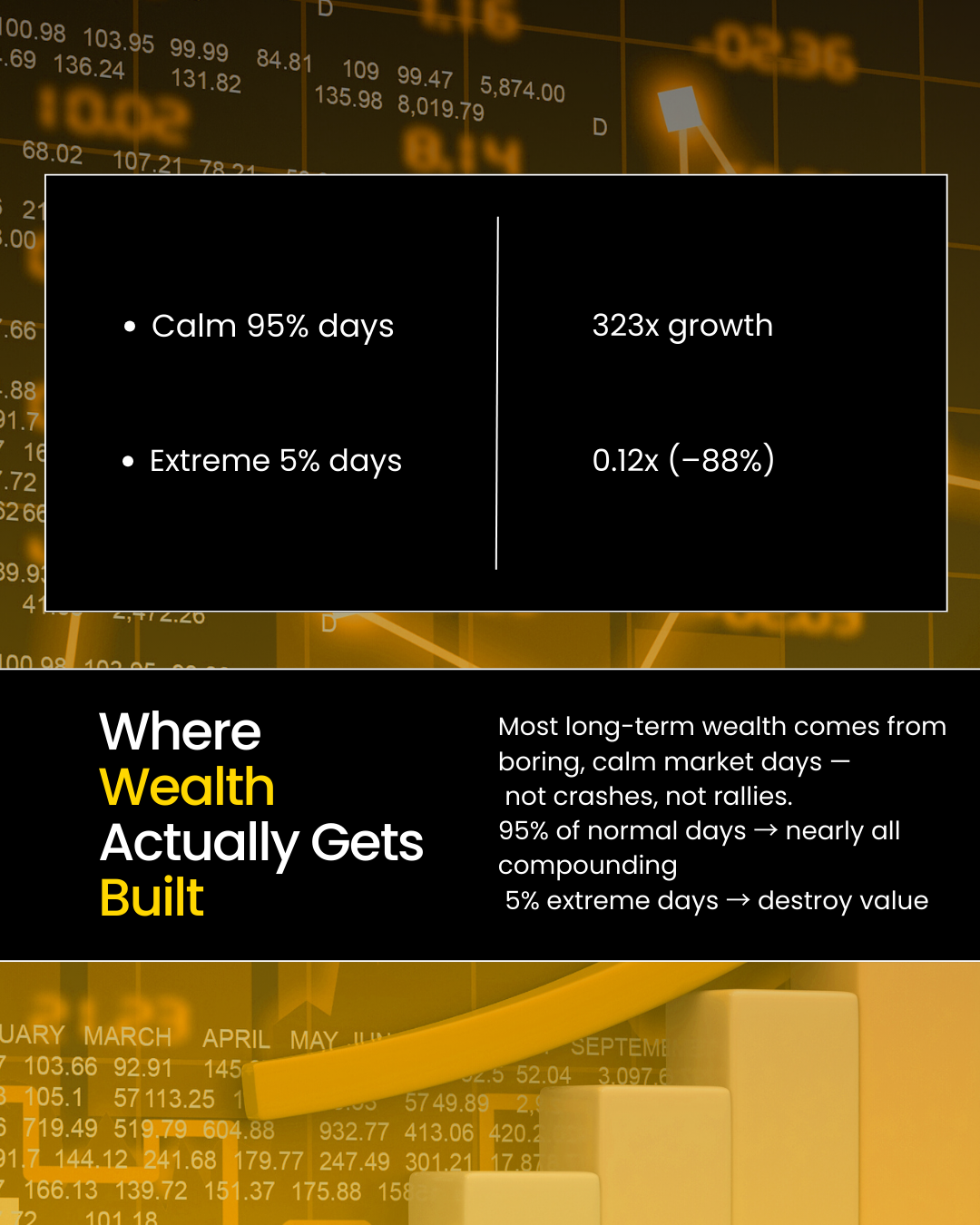
When returns are split between extreme and calm periods, the pattern becomes even clearer. The most volatile 5% of trading days over the last 31 years produced a cumulative return of just 0.12x, meaning capital exposed only to these days would have lost 88%. Meanwhile, the calm 95% of days generated a massive 323x growth.
Zooming out to monthly data confirms this. Calm months averaged +1.7%, while volatile months averaged –8.4%. Nearly all compounding came from long, steady stretches rather than dramatic market swings.
Conclusion
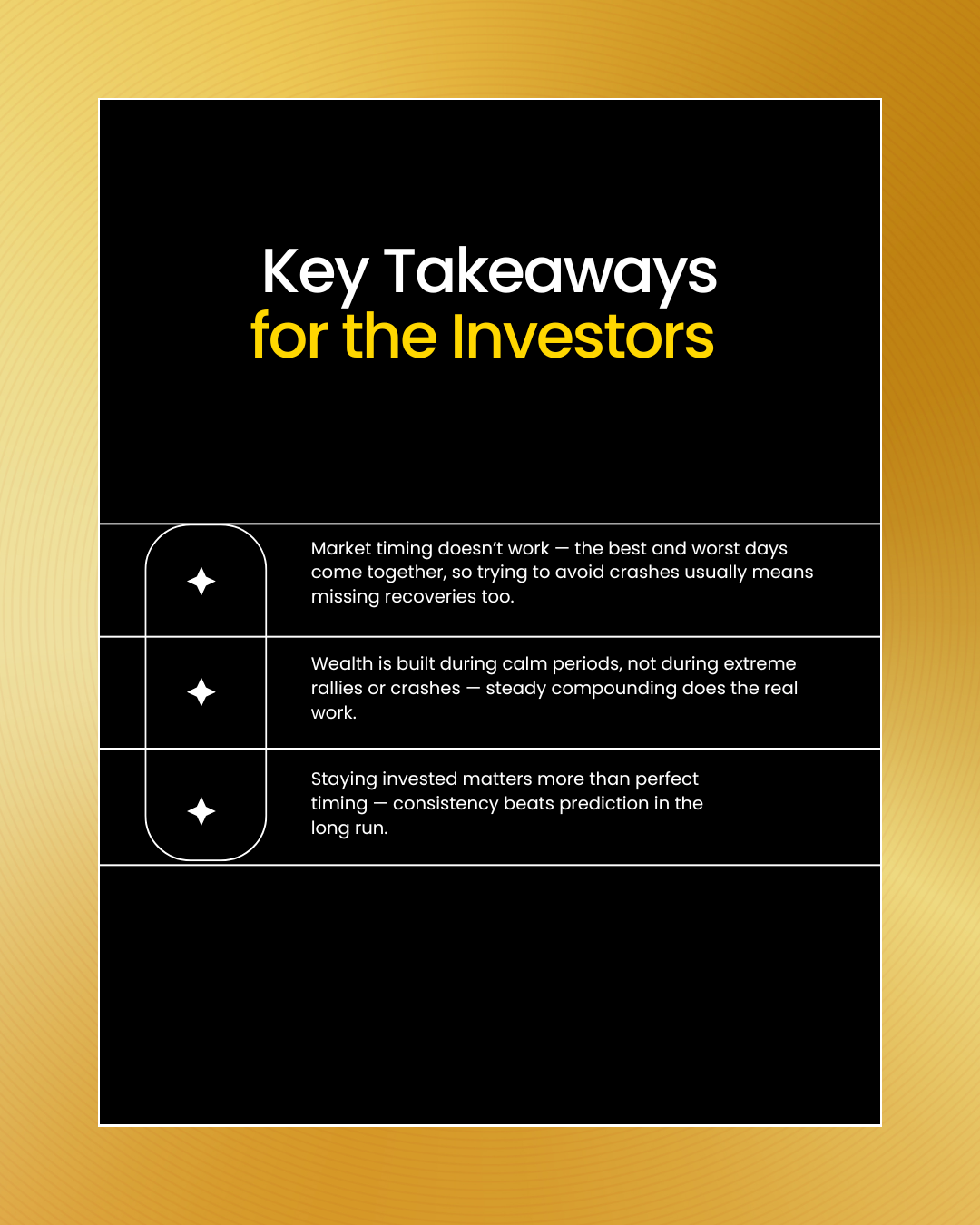
Extreme days create headlines, but calm periods create wealth. Long-term investing success depends far more on patience, consistency, and time than on catching or avoiding a few extraordinary sessions. The real driver of returns is not perfect timing; it is long-term participation.

1 Likes

0 comments

Share
No comments yet