

Top Deals
 Back
Back Preqt
Preqt11:56 AM · Feb 21, 2026
At Munich Security Conference 2025, Germany’s Chancellor said something striking: “The rules-based order no longer exists.” Beyond geopolitics, this signals a deeper shift in how money, power, and trade are being reorganised globally.
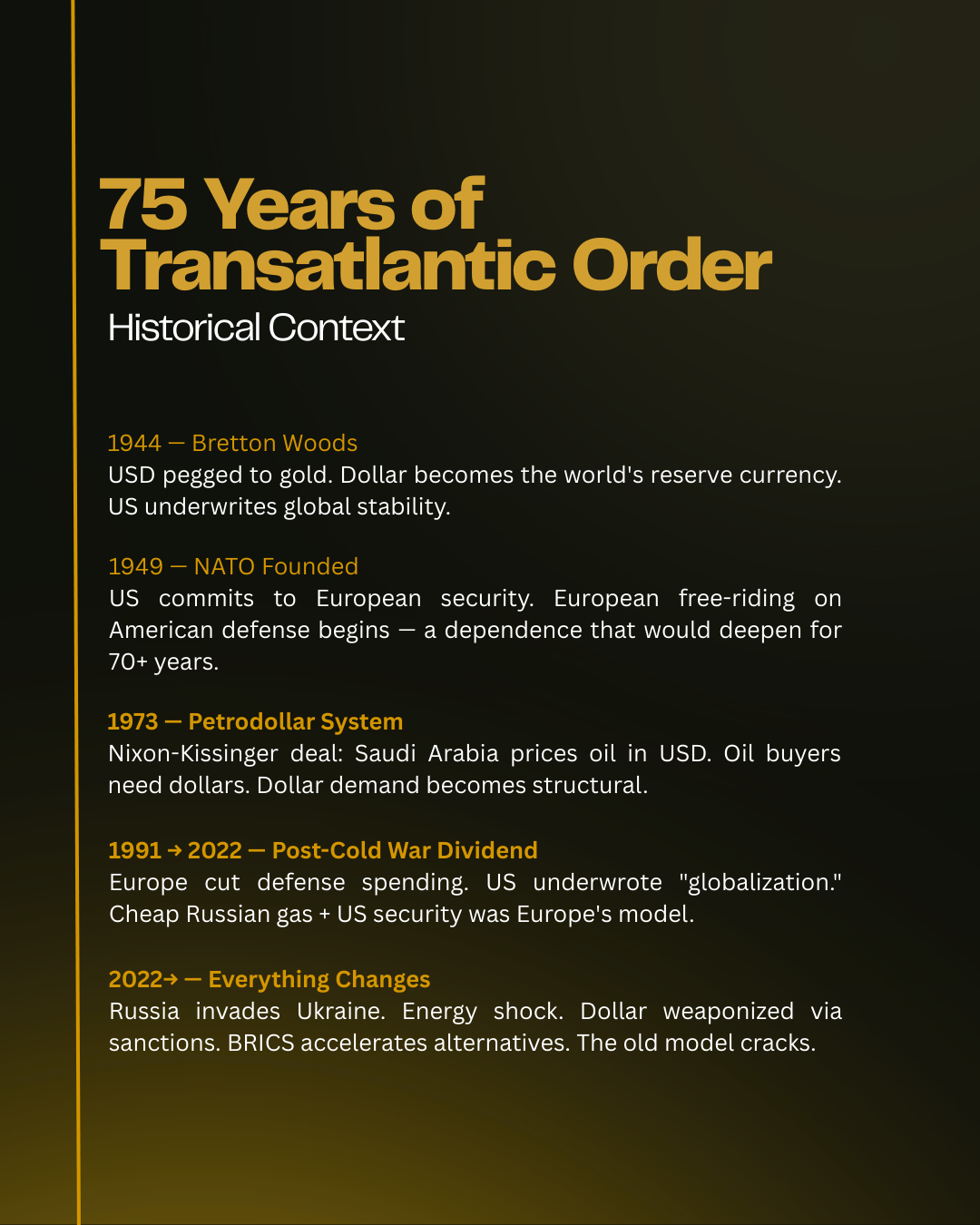
For over 75 years, the global system rested on three pillars: the dollar as reserve currency, US-backed security through NATO, and the petrodollar system that anchored energy trade. Today, all three are slowly being reshaped.
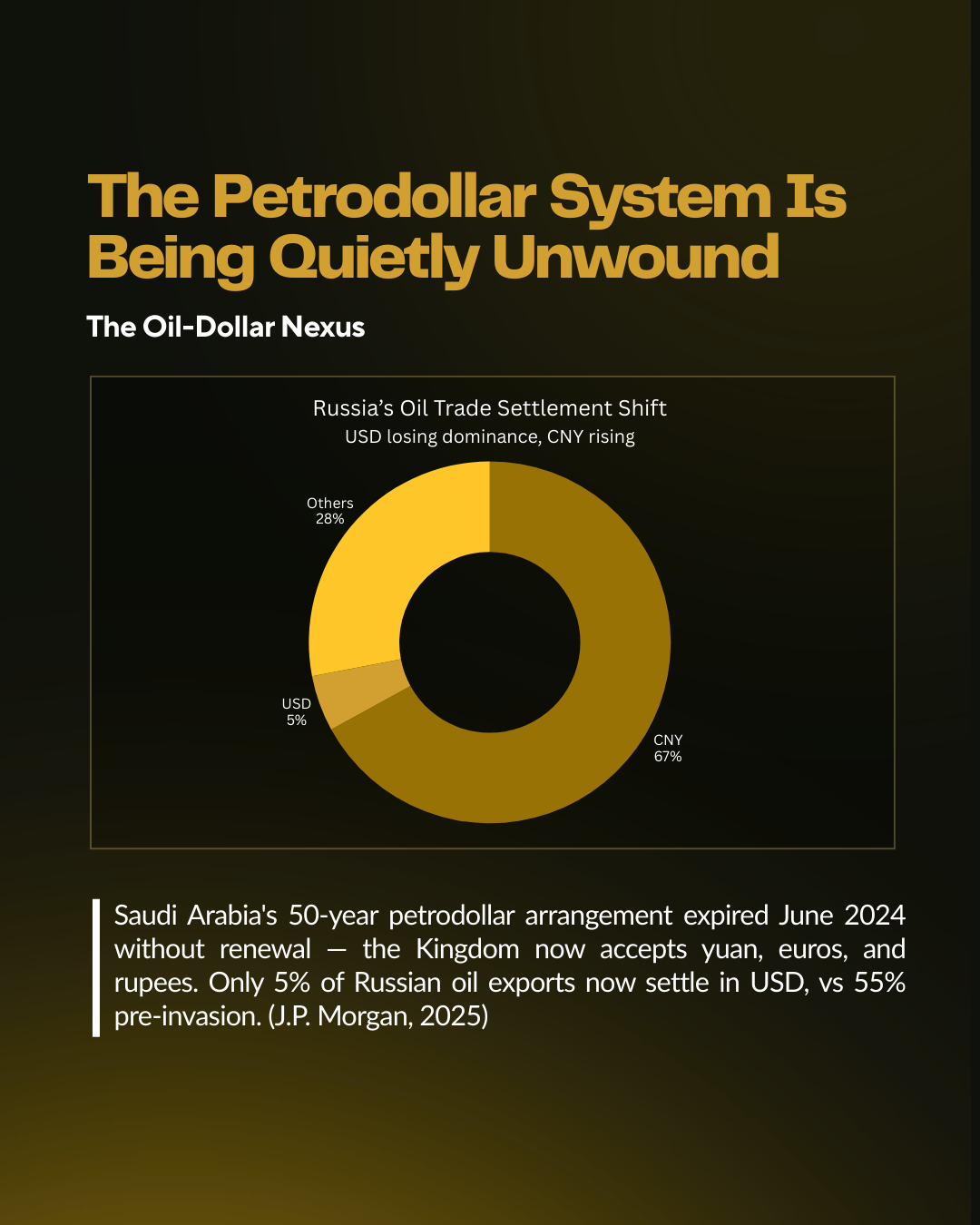
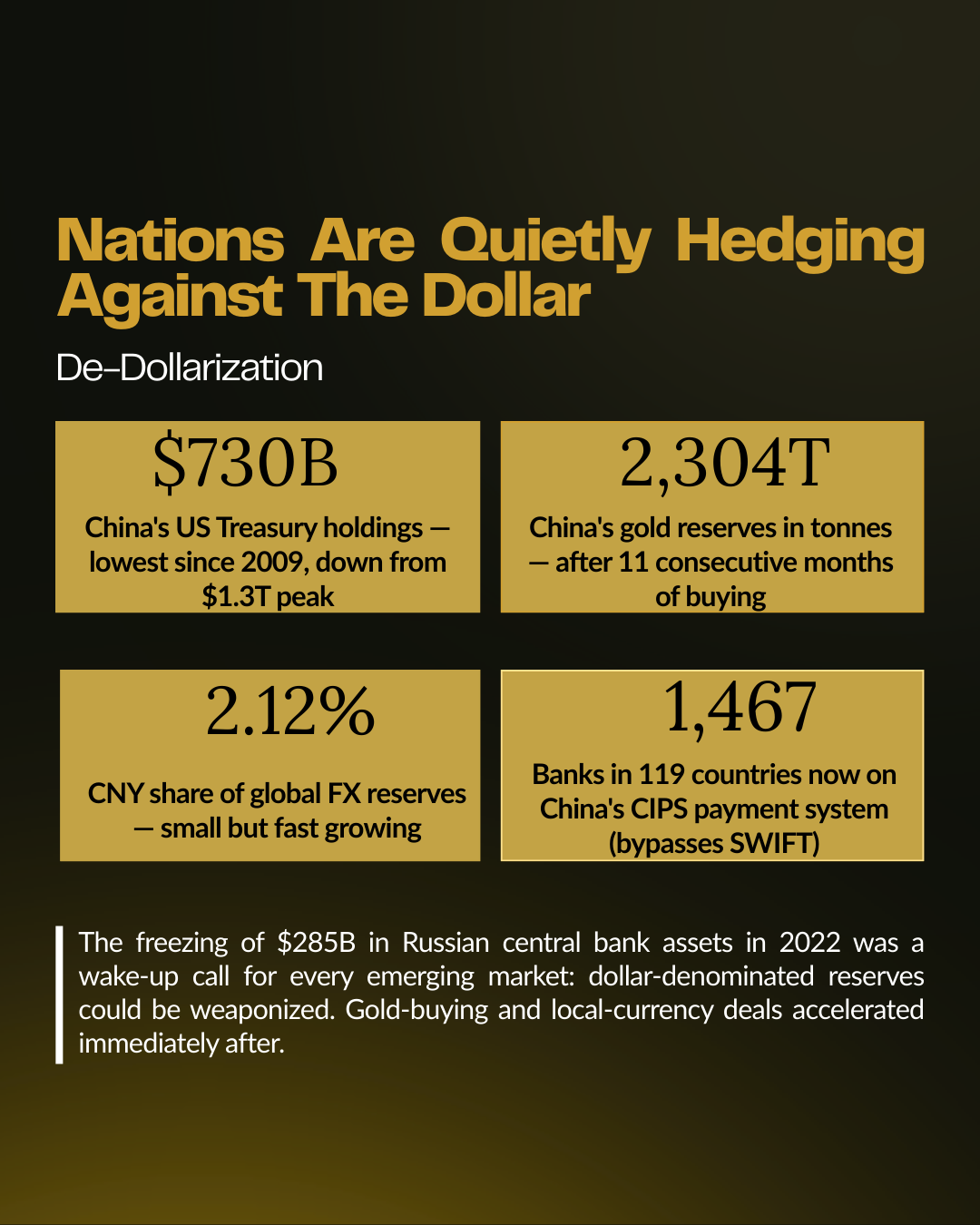
The dollar’s share of global reserves has fallen from 72% in 2001 to 57.7% today. China has cut its US Treasury holdings by nearly 45%, while central banks are buying gold at the fastest pace since the 1950s. Saudi Arabia quietly let its 50-year petrodollar arrangement expire in 2024, now accepting yuan, euros, and rupees for oil. Meanwhile, only 5% of Russian oil exports are now settled in dollars, down from 55% before 2022.
Sanctions, energy weaponisation, and geopolitical fragmentation have accelerated this shift. The freezing of $285 billion in Russian reserves acted as a wake-up call for emerging markets, pushing countries to diversify reserves and settle trade in local currencies. Simultaneously, Europe is rearming at scale, breaking decades of fiscal restraint, while reshaping its energy supply chains away from Russian dependence.
This is not simply a geopolitical story. It is a capital allocation story.
Energy transition, defence manufacturing, commodities, financial infrastructure, and dual-use technologies are emerging as multi-decade investment themes. As global supply chains realign and currency systems fragment, the cost of capital, trade flows, and investment returns will increasingly reflect geopolitical positioning.
The global order is not collapsing overnight. But its structure is changing gradually, visibly, and irreversibly.
The real question for investors is no longer if the system is shifting but whether portfolios are still positioned for a world that no longer exists.


5 Likes

0 comments

Share
No comments yet