

Top Deals
 Back
Back Preqt
Preqt10:32 AM · Jan 28, 2026
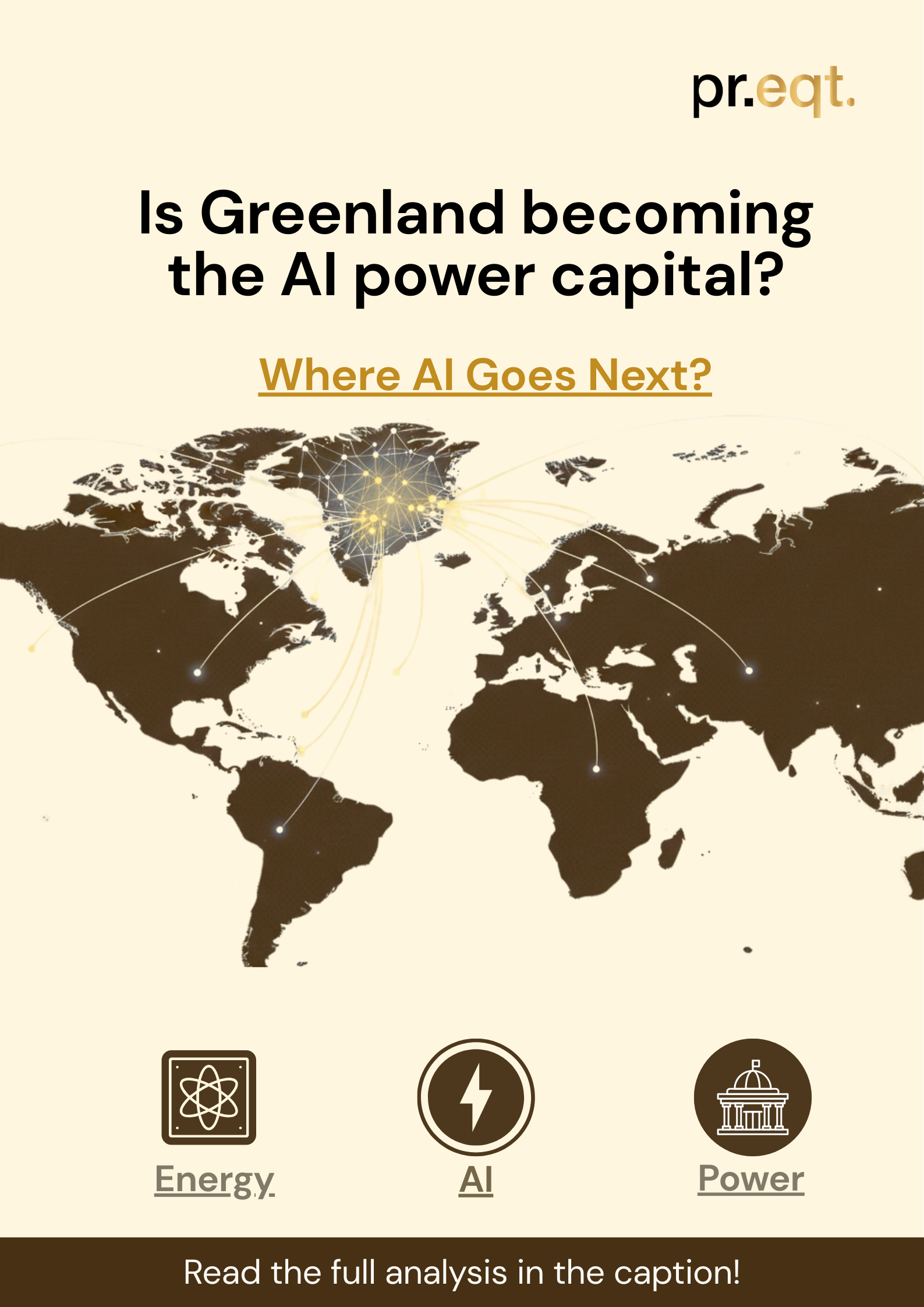
A former senior aide to Donald Trump’s first-term administration is backing a massive AI data centre in Greenland’s remote Kangerlussuaq region. The project, led by Drew Horn of GreenMet, aims to support the exploding power needs of global AI hyperscalers. If executed as planned, the facility would reach 300 MW capacity by mid-2027 and scale up to 1.5 GW by the end of 2028. That would place it among the largest AI-focused data centres globally.
Greenland offers two rare advantages: climate and minerals. Its Arctic temperatures can cut data-centre cooling costs by nearly 40%, a major advantage as AI infrastructure becomes increasingly energy-intensive. At the same time, the island holds deposits of critical minerals like copper, nickel, and rare earths, essential for AI hardware, power grids, and next-generation chips.
The project gains attention amid renewed US interest in Greenland, including Donald Trump’s earlier push to acquire the territory from Denmark. While officially unrelated, the overlap highlights how AI, energy security, and critical minerals are becoming strategic assets. Control over compute capacity may increasingly matter as much as control over oil once did.
According to Goldman Sachs, global data-centre electricity consumption is expected to rise 50% by 2027 compared to 2023. AI models require exponentially more compute, pushing hyperscalers to seek locations with cheap power, efficient cooling, and long-term scalability. Greenland checks many of those boxes, on paper.
The project is not yet approved. Land acquisition and local authority clearances are still pending, and investor names remain undisclosed. While Horn claims binding commitments for half of both development phases, execution will depend on political alignment, infrastructure readiness, and local buy-in.
If AI is the new industrial revolution, its infrastructure will shape global power balances. Whether Greenland becomes a cornerstone of that future, or remains a bold idea on ice, will depend on how technology, capital, and geopolitics converge next.

2 Likes

0 comments

Share
No comments yet