

Top Deals
 Back
Back Preqt
Preqt8:30 AM · Jan 14, 2026
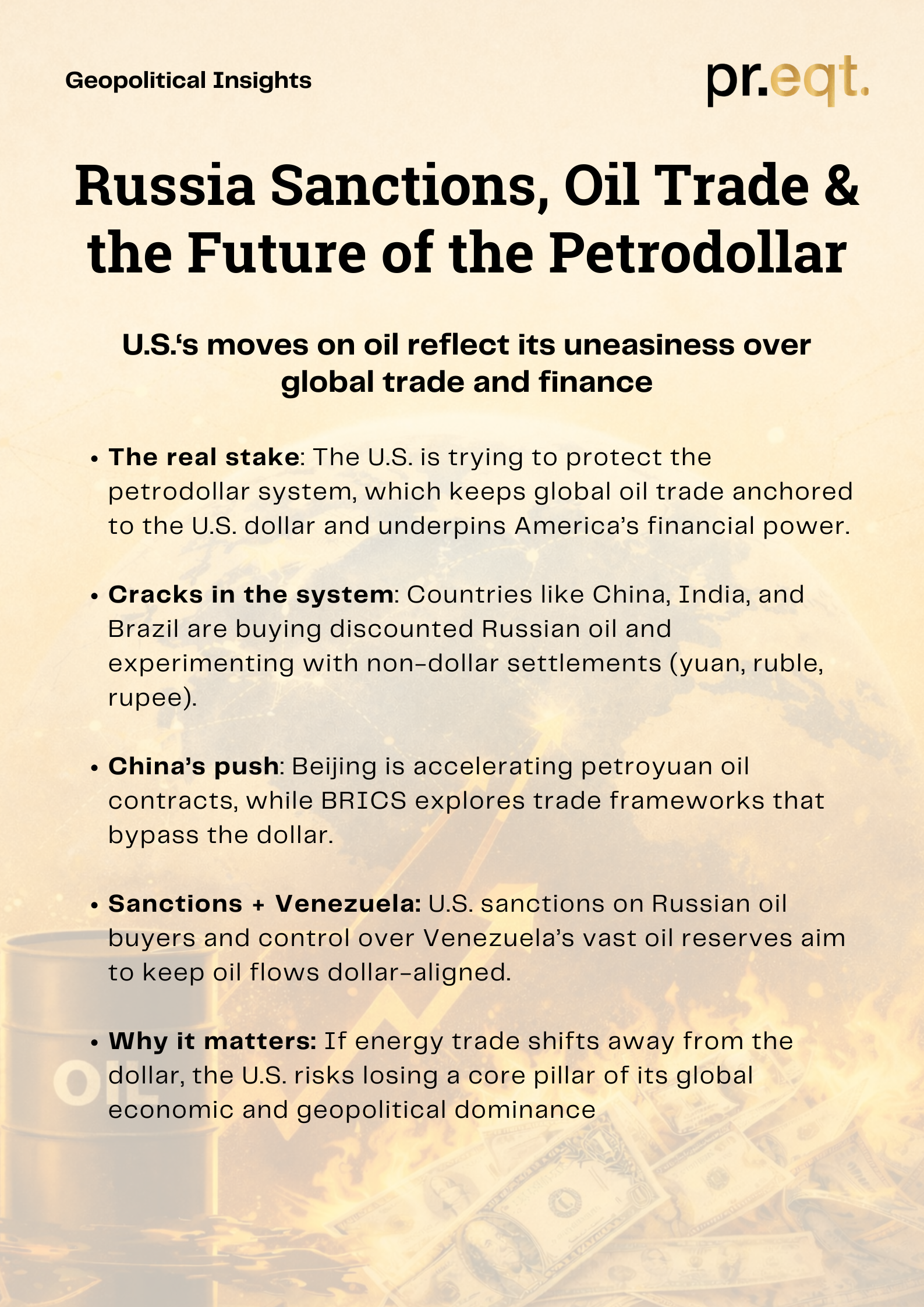
President Donald Trump backed the Sanctioning Russia Act of 2025, a bill that would allow tariffs of up to 500% on countries that continue to import Russian oil, natural gas, and petroleum products. The legislation aims to penalize major buyers such as India, China, and Brazil for ongoing purchases of discounted Russian crude despite Western sanctions.
Shortly after Nicolás Maduro’s capture on January 3, 2026, the U.S. government stated its intention to market Venezuelan oil and sell at least 50 million barrels of previously blocked crude, indicating a strategic shift to expand U.S. influence in global energy markets.
For decades, the petrodollar system — in which crude oil transactions are largely conducted in U.S. dollars — supported the dollar’s role as the world’s primary reserve currency and underpinned the United States’ financial influence.
Since the 2022 Ukraine invasion, buyers such as China and India have significantly increased purchases of discounted Russian crude, with India’s imports at times accounting for more than one-third of its total crude needs. Some of these trades have been settled in currencies other than the U.S. dollar, such as the Chinese yuan and Indian rupee.
China has actively promoted yuan-denominated oil trade, while BRICS nations have discussed mechanisms to reduce reliance on the dollar in international commerce.
These developments reflect broader shifts in global energy and financial markets as the U.S. pursues sanctions and alternative sources of supply, including Venezuelan crude, amid ongoing debate about the future role of the dollar in global trade.

4 Likes

0 comments

Share
No comments yet